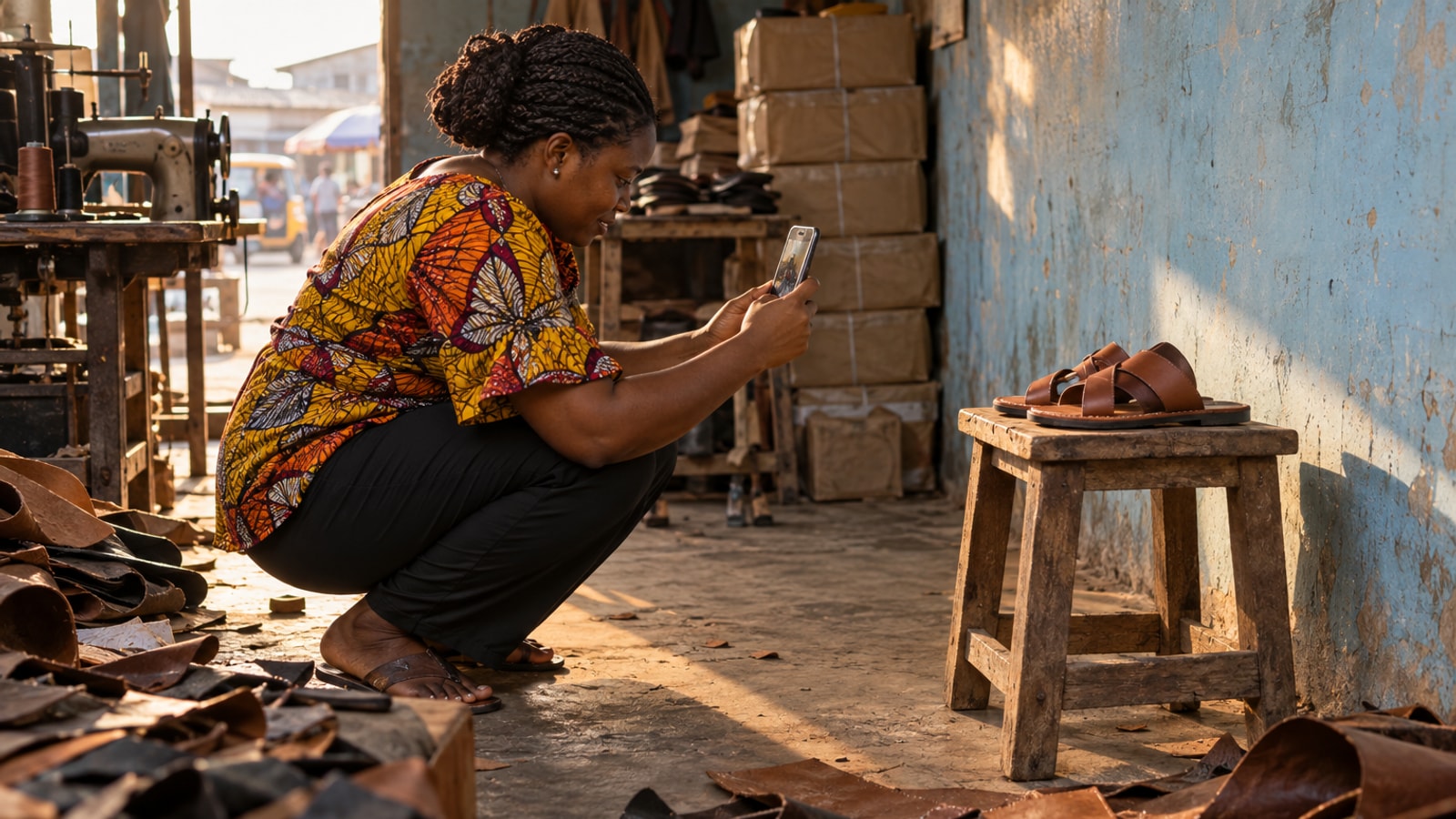
Start in the middle of October, about six weeks out. Not because posting early sells anything by itself, but because the pictures you need for a December sale take one afternoon to make, and that afternoon does not exist in December. Most festive social media management advice is built around a seven-day countdown to one Friday, which is the wrong shape for a Nigerian business.
Nigeria's Black Friday is a month, not a day
Black Friday 2026 falls on 27 November, but the selling window here opens weeks earlier. Jumia's 2025 campaign ran from 31 October to 30 November, a full month of discounts rather than a weekend. Konga and Jiji run their own November campaigns alongside it, and the smaller brands take their cue from the big ones.
That changes what you are planning. You are not counting down to a single day. You are working out how to stay visible across four or five weeks while every feed your customer opens is full of percentages off, and then through a December that behaves like its own season. Business activity hit 53.5 on the Stanbic IBTC index last December, a thirteen-month high pushed up by a marked rise in new orders as festive spending arrived.
Build a seven-day plan in mid-November and you walk into a month-long fight holding nothing.
October is the cheapest attention you will get this year
Paid reach gets more expensive as the season closes in. One agency dataset tracking its own client accounts found Instagram CPM up 65 per cent year on year on 1 December 2024, with Facebook up 38 per cent the following day, though the writer notes the spike is less automatic than it used to be. That is roughly what it costs to buy a stranger's attention in the first week of December. A post you publish on 20 October costs what every other post costs, which is nothing.
The cheap version of festive marketing is therefore to spend the next three weeks growing the audience that will see your December posts for free, instead of paying December prices to reach people who never heard of you.
Timing on the buyer's side points the same way. America's National Retail Federation finds that 43 per cent of holiday shoppers say they generally start before November, mostly to spread the cost. I have not seen a Nigerian figure that good, and I would not assume it transfers; buying here is more compressed and far more cash-dependent. The one group that does reliably buy early is the customer ordering from abroad for family at home, because delivery takes time and they know it.
The shortage is pictures, not ideas
Take an ordinary case, invented but familiar. Someone runs a women's shoe brand in Aba with two machinists, selling through Instagram and WhatsApp and shipping nationwide.
Last year she posted fourteen times in the first week of the November window, then went quiet for eleven days because she was packing parcels until midnight. When she came back, the only usable photos on her phone were of a style that had sold out on day three. She posted it anyway. Twenty-two people asked for it in the comments. She apologised to every one of them and sold nothing that week.
Her problem was never ideas. She had plenty. She ran out of pictures of things she actually had, at exactly the point in the year when she had no time to take more.
One October afternoon covers most of December
Block out three hours this month and shoot against one background in daylight. For every style you hold real stock of, take three frames: the product by itself, the product being worn or used, and a hand holding or wrapping it. Add one ten-second clip per style with no talking in it.
Then shoot the five things nobody ever has ready and everybody needs by late November: sold out, back in stock, last pair, orders closing on this date, and December delivery cut-offs. Finish with one photo of you or your bench, because the owner's face outperforms the product shot more often than most people expect.
Now write the part that makes it work. One sheet, one line per style: how many you have, the price, the date you plan to post it. When a style sells out you cross the line and pull the post that was queued for it. That sheet is the whole system, and it is the step the holiday calendar templates leave out, because they assume your stock is infinite.
What goes in the calendar, in four blocks
From now to the end of October, sell nothing. Show stock arriving, a shoe being finished, what you have restocked. You are buying reach while it is still free.
Through November, pick one offer and repeat it more than feels comfortable. Four or five weeks of noise means most of your followers see any given post once, if that. The same offer stated eight different ways is not repetition to them.
In the last week before the 27th, say the specific thing: what is left, what the price is, when it ends.
In December, the single most useful post you will publish all year is your last order date for delivery before Christmas. Pin it. Repeat it weekly. It prevents the arguments that eat January.
When a festive calendar is the wrong thing to build
If your stock is genuinely uncertain, do not schedule product posts at all. A queued post for a sold-out item costs you more than silence does, and the apology costs more again.
If you sell a service with no seasonal offer, the Black Friday calendar is borrowed clothing. A tax consultant does not need a countdown. A quiet December and a January campaign will do more.
And if you are the person packing the parcels, cut the plan down to what you can keep while exhausted. Two posts a week you actually publish beat six you planned in October and abandoned on 12 November. The audit of where social media hours actually go is worth doing before you commit to a festive schedule.
Where a tool earns its place
Everything above works on a free account, a phone and one sheet of paper. Software only changes the arithmetic when the volume gets silly, and a Nigerian festive season is when it does.
Threadovo is social media management software that also makes the content, which is what turns that October afternoon into a stocked month. You upload the shoot, it writes the captions per platform in your voice, generates the sale cards and short clips you never photographed, and keeps them in a library you can pull from at 11pm. The calendar and composer let you lay out all four November blocks in one sitting, with you approving each post before it goes.
Pricing is in naira from ₦39,000 a month, with a fourteen-day trial and no card. An agency running ten client calendars through the same window gets a separate workspace per client.
It will not tell you what is in your store, and it cannot pack a parcel. Keeping the stock sheet honest is still your job, and in December that sheet decides whether the posting helps you or embarrasses you.
Questions people ask
When should I start posting for Black Friday in Nigeria?
Mid-October for content, end of October for offers. The Nigerian sale window opens around 31 October rather than on Black Friday itself, so a plan that starts in mid-November is already late.
Do I have to discount to take part?
No. Free delivery inside your city, a bundle, gift wrapping or a guaranteed delivery date all work, and they protect the margin that a straight percentage off eats. If matching a rival's discount would leave you with nothing, do not match it.
How many posts do I need for the festive season?
Pick the number you can keep for six straight weeks while also fulfilling orders, which for most one-person businesses is three a week. A smaller plan you finish is worth more than a large one that stops on the day you get busy.
Should I pay to boost my festive posts?
Only after you know which unpaid post already brings orders, and only knowing that December prices run well above the rest of the year. Money behind a post nobody bought from in October will not rescue it in December.
Is it too late if it is already November?
No, but change the order of work. Shoot what you have this week, write your delivery cut-off date, and post only about stock you can confirm. Skip the elaborate calendar and keep the stock sheet.