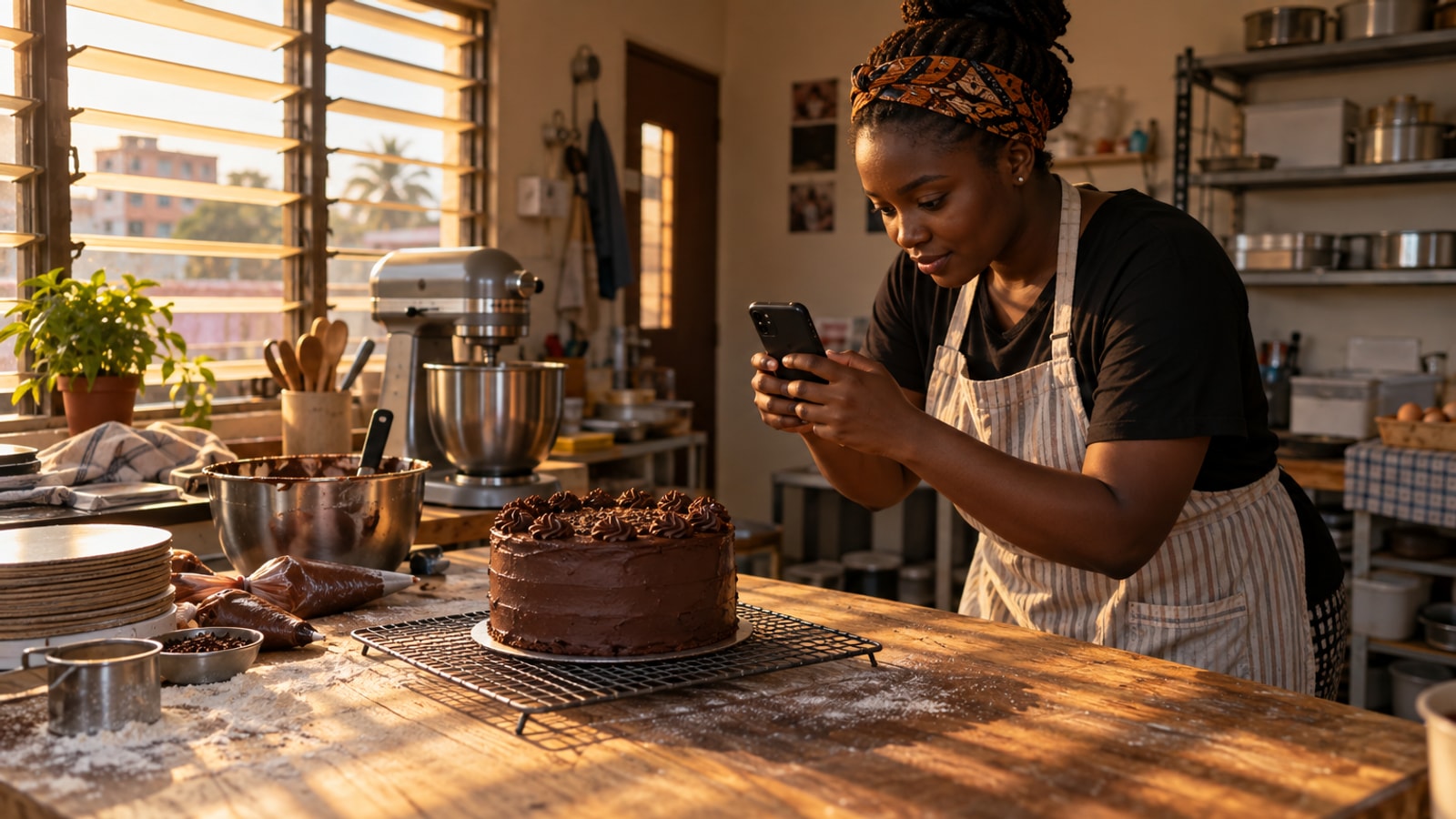
Amara bakes cakes out of a two-room kitchen in Surulere and has been putting 28 hashtags under every post since 2023. #cakesinlagos, #lagosbaker, #explorepage, #cakelover, and 24 more of the same. Her reach never moved, and this year Instagram started quietly refusing some of the tags, so she asked whether the last two years of that had been wasted. Mostly, yes. The part of social media management that hashtags were supposed to handle has moved to search, and switching over takes about an hour.
Instagram has cut you down to five hashtags
That is the part that ends the argument. Instagram has said it will "gradually update the number of hashtags that you can include in a caption for a reel or post to 5", and that fewer, more targeted tags do better for the post and for the person reading it (Social Media Today). The rollout is gradual, so your account may still take more than five for a while. Plan for five anyway.
It was coming. Instagram removed the ability to follow a hashtag on 13 December 2024, which closed the one route by which a tag could push a post into the feed of someone who had never heard of you (Social Media Today).
Adam Mosseri, who runs Instagram, has said it directly more than once. Hashtags help Instagram work out what a post is about, "but in general, no, I wouldn't try to think of hashtags as a way to get more distribution" (Hootsuite).
A hashtag is a label. Labels are worth having. They are not traffic.
What took over is search, and now Google's too
Since 10 July 2025, public posts from Instagram business and creator accounts can be indexed by Google and Bing, which means a caption, a Reel and its alt text can show up in an ordinary web search (Metricool). It is switched on by default for public professional accounts, and you can turn it off in your privacy settings if you would rather not be there.
Put that next to the hashtag cut and the advice writes itself. The words in your caption now do two jobs: they tell Instagram's own search what you sell, and they sit on a page Google reads. A block of tags at the bottom does neither, because nobody has ever typed #cakesinlagos into Google. They type "birthday cake delivery Surulere".
The local maths is why broad tags were always a bad bet
Instagram in Nigeria is smaller than it feels from inside it. NapoleonCat estimates about 8.9 million Instagram accounts in the country in September 2026, around 3.7% of the population, with 25 to 34 the biggest group (NapoleonCat). Those are modelled ad-audience figures rather than a headcount, so treat them as a rough scale, not gospel.
At that scale, #explorepage puts you in a queue with the entire world for attention from a local audience of a few million. "Cake delivery Surulere" puts you in a queue with maybe nine other bakers, in front of someone holding a phone and a budget. The second queue is the one worth standing in.
The hour of work that replaces your hashtag block
None of this needs software. Do it on your phone tonight.
Start with the name field on your profile, the one under your username, because Instagram searches it. Amara's said "Amara's Kitchen". It now reads "Amara's Kitchen | Cakes, Surulere Lagos". Nothing else about the account changed.
Then write the first line of every caption as the sentence a customer would type into a search box. Not "new drop" but "Chocolate birthday cake, 8 inches, delivered in Surulere and Yaba". Put the thing, the place, and the price band in plain words in the first two lines, where both Instagram and Google will read them.
Keep three to five tags and make them specific. One for what it is, one for where you are, one or two for the niche. #surulerecakes earns its place. #love does not.
Fill in the alt text. It is under Advanced settings when you post, it takes fifteen seconds, and it is one more line of text describing the picture that search can read.
Last, go back through your ten best posts from the past year and rewrite those captions. They are already ranked and already indexed, and a caption edit does not reset anything.
How you check whether it worked
Give it four weeks, because search results move slowly compared to the feed.
Open the insights on each post and look at views from non-followers. That number is the one hashtags were supposed to lift and never did. If the caption rewrite is working, it climbs on the posts you rewrote and stays flat on the ones you did not, which is as close to a controlled test as a single account can give you.
The other signal is cruder and better: what people say when they message you. Amara's DMs used to start with "hi". By the second month a few of them started with "do you deliver to Yaba", which is a sentence that only comes from someone who found her by searching for it.
When this is not your problem
If you sell almost entirely through referrals and a WhatsApp list, being findable in search is not your bottleneck, and this whole exercise will return nothing. Fix the thing that is actually broken.
Keywords also cannot rescue a dull post. Search decides who gets shown your picture; the picture decides whether they care. A well-labelled photo of a badly lit cake is a well-labelled photo of a badly lit cake.
And the volumes are small. Nobody in Nigeria is searching your category ten thousand times a month, so this is worth doing because the customers it brings arrive ready to buy, not because it will flood you. If you need volume this quarter, short video and paid reach are what do that, and the money side of that is worked out in should you boost your posts, or just post more.
Where a tool helps, and where it does not
The work above is not hard. It is just repetitive, which is the reason most accounts stop doing it by week three. Writing a searchable first line for every post, on every platform, in the brand's voice, every week, is the part that quietly does not happen.
The repetition is what Threadovo is for. It plans the week, writes the caption for each platform in your brand's voice, generates the images and clips when the camera roll is empty, and publishes on schedule with you approving the batch. A drafted caption is easier to drop your own keywords into than an empty box at 11pm. Its Autopilot drafts a week, emails you the batch with a deadline, and posts whatever you have not deleted by then. Pricing is in naira from ₦39,000 a month with a 14-day trial, no card. Agencies doing this across a dozen client accounts have the same problem at twelve times the size, which is what the agency workspaces are for.
What no tool fixes is the decision about which words your customers actually use. You know that better than any software does, because you read your own DMs.
Questions people ask
How many hashtags should I use on Instagram now?
Three to five, all specific to the post. Instagram is rolling out a cap of five per caption, and its own position is that a smaller, more targeted set performs better than a long list.
Do hashtags still work at all?
They still work as labels that help Instagram classify a post, and people do still search them. What they no longer do is push your post to strangers, which is the job most small businesses were using them for.
Should I put hashtags in the caption or the first comment?
It stopped mattering once they stopped driving reach. Put them in the caption so you can see them and edit them, and keep the count low enough that they do not crowd out the words a customer would read.
Is it true that Google can find my Instagram posts?
Yes, for public business and creator accounts, since July 2025. Your captions, Reels and alt text can appear in Google and Bing results, and you can switch that off in your privacy settings if you prefer.
What should I write in a caption instead of hashtags?
The sentence someone would type to find you, including the place. "Ankara dress maker in Surulere, fittings on Saturdays" does more for you than twenty tags, because it matches what people search both inside Instagram and on Google.