Most small businesses spend about six hours a week on social media, and almost none of them can say where the hours went. That is the awkward part of social media management for a shop in Lagos or Accra. The time never arrives in one block you can defend. It arrives in ninety-second pieces between customers, and it feels like nothing until the month ends and the page has three posts on it.
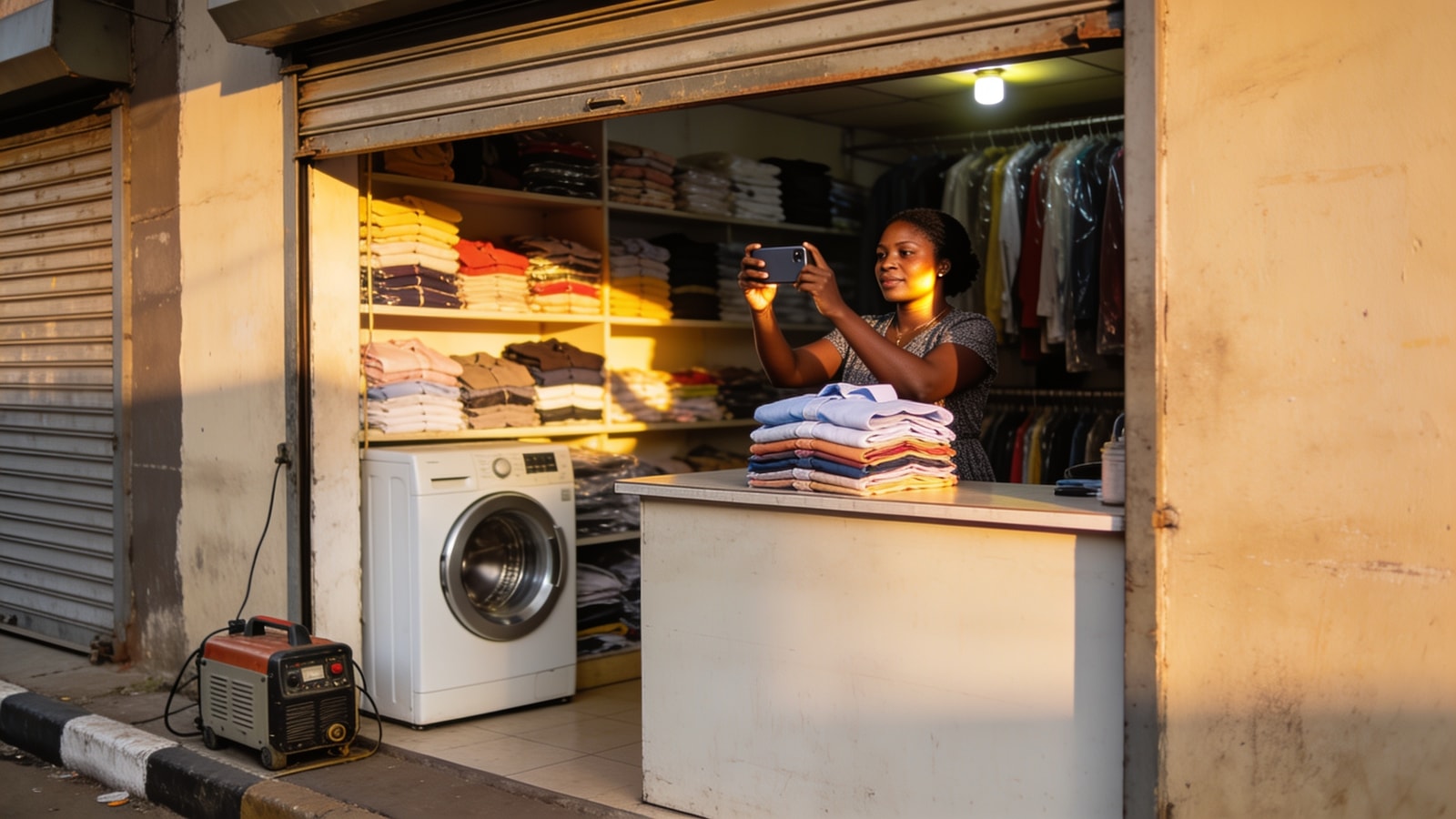
Picture a laundry on Bode Thomas in Surulere. Two machines, a generator, one rider doing pickups, and an Instagram page with 1,900 followers that the owner, Tosin, calls the page she keeps forgetting. Ask her how long it takes her in a week and she says thirty minutes. Count it properly and it is closer to five hours.
How many hours a week does social media take a small business?
Three to six hours a week is the honest range for a one-person business posting a few times a week. A VerticalResponse survey of small business owners found 43 percent spend six hours a week on social media marketing, which is about an hour and twelve minutes a day across a working week. Owners who batch their work land at the bottom of that range. Owners who post reactively land above it and feel worse about it.
That range covers making and publishing the posts. It does not include running ads, and it does not include selling in the DMs, which for most Nigerian businesses is the part that actually produces money.
Where the five hours actually go
Here is Tosin's week, counted honestly rather than remembered:
- Thinking about what to post: roughly an hour, spread across the whole week in pieces, none of it at a desk.
- Taking photos or a clip: 40 minutes, most of it redoing a shot because the shop light is bad after 4pm.
- Writing captions: about 15 minutes a post, three posts, so 45 minutes.
- Editing and publishing: half an hour.
- Replying to comments and DMs: 90 minutes, none of it in one sitting.
- Checking how the posts did: 20 minutes, mostly refreshing.
That is four and a half to five hours. Only about an hour of it is the work she thinks of as doing social media. The rest is starting and stopping, and starting again is the expensive part. Every time she puts the phone down to attend to a customer, she pays the entry cost a second time: finding the photo, remembering the caption she had half written, working out what day it is in her own plan.
This is why "just spend 30 minutes a day" advice fails here. Thirty minutes chopped into ten pieces is not thirty minutes of work.
The Nigerian hours are not the same hours the surveys counted
Those surveys assume a desk, a laptop on mains power and flat-rate internet. Two local numbers change the arithmetic.
The National Bureau of Statistics found the average Nigerian household gets 6.6 hours of electricity a day in its 2024 residential energy survey. And telecom prices went up when the NCC approved a 50 percent tariff increase in January 2025, the first adjustment since 2013. Uploading four clips on mobile data is now a decision with a price attached to it.
So the useful question is not how many hours you should spend. It is which two hours you actually control. For most small businesses that is one predictable window a week when the phone is charged, the power is on and nobody is standing in front of you. That window is the most valuable thing in your content week, and most people spend it scrolling other people's pages.
What to do this week without buying anything
One block, one shoot, one queue.
Pick the two-hour window. Sunday evening works for a lot of shop owners because the street is quiet and the generator is already running. Put it in your phone as a repeating event so it is a thing you keep rather than a thing you remember.
Shoot for the month, not for the day. Twelve photos and four short clips in one session, taken in daylight with the door open, will carry four weeks of posting. Shoot the boring things: the folded stack, the rider loading the bag, the machine mid-cycle, a customer's shirt before and after. Boring and specific beats polished and generic.
Write the captions in one sitting while the photos are still in front of you, then queue everything. Meta Business Suite schedules Instagram and Facebook posts for free, and TikTok lets you schedule from the web. That alone moves the publishing minutes out of your working day.
What this does not fix is replies. Comments and DMs go stale in hours, so they cannot be batched into a Sunday. Two fixed windows a day, one after lunch and one before you close, is enough for most small pages, and it is the highest-return work on the list. We wrote about turning those replies into orders separately.
Where software actually removes hours, and where it does not
A scheduler saves you the publishing time, which is 30 to 45 minutes a week. Useful, but it is the smallest number on the list. The hours are in the making: deciding, shooting, writing. Anything that does not touch those three is selling you a calendar.
That is the part Threadovo is built for. It plans the week from what is actually happening, writes the caption for each platform in your brand's voice, generates the images and short clips, and publishes on schedule, with you approving what goes out. Autopilot goes one step further for a routine week: it drafts everything, tells you the deadline by email, and publishes whatever you have not deleted by then. Plans start at ₦39,000 a month with a 14-day trial and no card, and there is a feature list and naira pricing if you want the detail. Agencies running several client pages have their own workspace setup.
The honest limit: software does not solve a decision problem. If you have never settled what your page is for, a tool that hands you twelve drafts you do not believe in costs you more time than it saves, because now you are editing twelve things instead of writing one. Get one month of posting you are happy with, by hand if necessary, then automate the shape of it.
When paying for any of this is the wrong call
If most of your orders come from WhatsApp status and people who already know you, and your public page has produced nothing in six months, the page is not your problem. Your offer or your follow-up is. Fixing those costs nothing and pays more.
If one person on your team enjoys the work and can do it in three hours a week, leave it alone. Software earns its place when the owner is the bottleneck, when the same owner is also the cashier, or when one person is running five client accounts and the fifth one keeps being the one that slips.
Questions people ask
How many hours a week should a small business spend on social media?
Most spend around six. Three to five hours, taken in one or two blocks instead of scattered through the day, is enough to post consistently and reply properly. More than that only pays off if you sell through the page directly, and even then the extra hours should go to replies rather than to making more posts.
Is it cheaper to hire a social media manager or do it yourself?
Doing it yourself is cheaper in naira and expensive in attention, because the hours come out of the part of your day when you should be selling. A junior manager or a tool makes sense at the point where you can name what the page is supposed to do. Before that, you are paying someone to guess.
How do I post consistently when power and data are unreliable?
Batch the upload rather than the intention. Make and edit everything offline in one session, then publish or schedule during a window when you know you have power and signal, and let a scheduler release the posts across the week. The failure is almost always trying to create and upload at the same moment.
Does scheduling posts hurt my reach?
No. Meta runs its own free scheduler inside Business Suite, and TikTok schedules from its web uploader, so the platforms are publishing the posts themselves. What actually hurts reach is posting something you would not have chosen if you had thought about it for five more minutes.
How long should one post take to make?
About 15 to 20 minutes end to end when you work in a batch, and close to an hour when you start from nothing each time. If a single post is taking you an hour, the problem is usually that you are deciding what to post and making it in the same sitting.