Two platforms, not five. For most Nigerian small businesses the pair that works is WhatsApp plus one place where strangers can find you, and that second one is more often TikTok or Facebook than Instagram. Most social media management advice ranks platforms from one to ten and leaves you to guess which rank matters to you. The split that actually helps is this: one platform exists to introduce you to people who have never heard your name, and one exists to take the order.
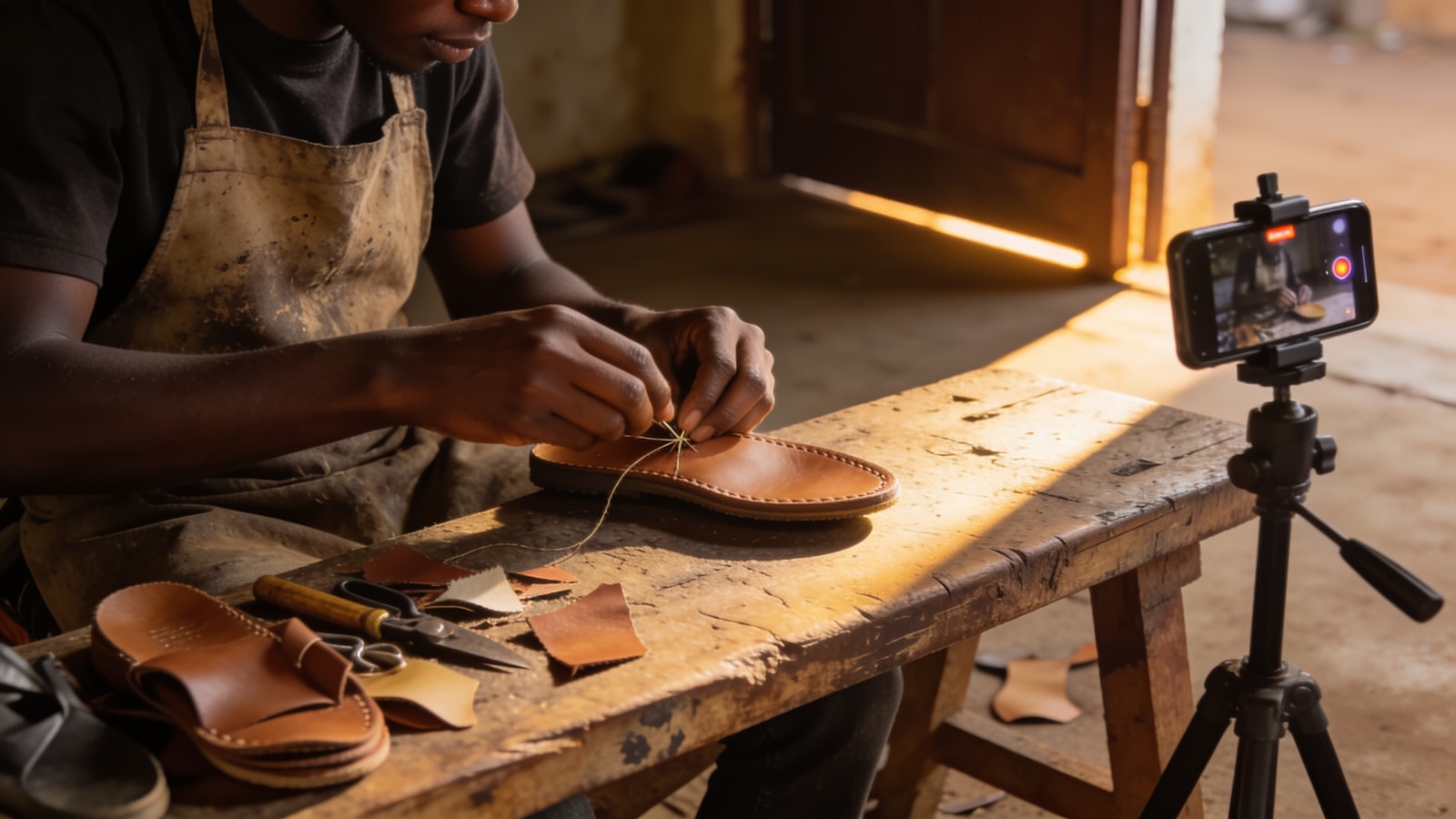
Chidera runs a two-person sandal workshop in Aba. For the better part of a year she posted to Instagram four or five times a week and got to something near a thousand followers, while almost every real order came from a WhatsApp group of church members and repeat customers. The Instagram work was not producing strangers. It was producing likes from other vendors selling the same thing. She was doing the finding-new-people job on the platform that, in Nigeria, is worst at it.
Instagram is smaller in Nigeria than most owners assume
Nigeria had roughly 9.5 million Instagram users in July 2026, against 46.1 million on Facebook, according to NapoleonCat's Nigeria figures. Instagram is about a fifth the size of Facebook here. That ratio surprises almost everyone, because the businesses you see online are on Instagram, and so are the people who sell courses about being online.
Preference data points the same way. When Nigerian users aged 16 and over named their single favourite platform, WhatsApp came first at 33.9 percent, Facebook second at 29.7, TikTok third at 15.7, and Instagram fourth at 9.2, per Krestel Digital's 2026 Nigeria report.
None of that makes Instagram useless. If you sell things people buy with their eyes and your buyer is 22 to 35 and urban, it earns its place. It is a poor default, though, and default is exactly how most people choose it.
WhatsApp takes the order, but it will not find you strangers
WhatsApp is the one platform you can assume your customer has. About 96.5 percent of Nigerian internet users aged 16 and over used it in the past month, per DataReportal's Digital 2026 Nigeria report. Nobody has to install anything, nobody has to trust a new checkout, and a voice note answers a question faster than any website.
The limit is the thing people skip. WhatsApp Status only shows to contacts who already have your number saved. There is no feed pushing you to people who have never met you. It is your counter and your till, not your shop window. A business that runs only on WhatsApp grows at the speed of word of mouth, which for some businesses is fine and for most is a ceiling they hit in about eighteen months.
So set up the catalogue, put your prices in it, use a business number, and reply fast. Then stop expecting it to bring new people.
Pick your discovery platform by where the decision is made
Your second platform is whichever one your kind of buyer uses to decide, not the one you enjoy.
TikTok is the cheapest reach in Nigeria at the moment. Its adult advertising reach in the country reached about 47.8 million and grew 43.4 percent year on year, per DataReportal. A phone video of you making the thing can find thousands of people who have never heard of you, with no ad budget. The cost is that it wants video constantly, the audience skews young, and views convert to orders at a rate that will disappoint you the first month.
Facebook is where the older money is, and it is stronger outside Lagos than most Lagos-based advice admits. Marketplace and local Groups still move furniture, generators, building materials, school uniforms, land, cars. If your customer is 35 and up, or buying for a household, this is often the better bet.
Instagram fits fashion, beauty, interiors, food styling, anything where the picture is the product and the buyer is young and urban.
LinkedIn is worth it only if you sell to companies, and then it is worth more than all of the above.
Two platforms beat five, and the reason is boring
The reason is not strategy. It is that you run out of Tuesdays. Buffer's own review of this question lands on two to three platforms done properly beating five or six done badly, and the failure mode is the same everywhere: a business spreads itself across six accounts, posts nothing good on any of them, and concludes after four months that social media does not work for their industry.
Every extra platform is a different aspect ratio, a different caption length, a different posting rhythm, and another inbox somebody has to answer. Two is a workload a busy owner can actually keep up for a year, and a year is the unit that matters.
What Chidera changed
She kept WhatsApp as the place orders happen, added the catalogue, and moved her posting effort to TikTok: one clip a day of the workshop, mostly her apprentice cutting and stitching, shot on the phone with no script. Instagram she did not delete. She just stopped treating it as the job, and now the same clip gets posted there afterwards in about a minute.
The part nobody mentions is that the first six weeks looked like failure. Three or four hundred views a clip, no orders. The change came from one video of a sole being glued that ran past a hundred thousand views and put nineteen new numbers in her phone. That is roughly how it goes, and it is why people quit in week five.
When social media is not the problem
If you are not sure why people leave without buying, posting more will not tell you. Two hundred views and no sales is usually a price problem, a trust problem, or a delivery problem. Fix the reply time first: a customer who waits nine hours for a price has already bought from someone else.
And if your business is genuinely local and physical, a barbershop, a plumber, a bakery on one street, Google Business Profile and a WhatsApp number will out-earn any amount of posting. Software cannot help with a business that does not need reach.
Where a tool helps, and where it does not
The work that survives the choosing is repetitive: deciding what goes out this week, writing the caption in a way that suits each network, cutting the clip, remembering to post on the day you are busiest. That is the part Threadovo is built for, planning the week, writing the captions per platform, making the images and short clips, and publishing them, with you approving before anything goes out. It starts at ₦39,000 a month with a 14-day trial and no card, and the pricing page shows what each tier includes.
What it will not do is choose your customers or answer your WhatsApp for you. Picking the two platforms is a decision only you can make, and the WhatsApp side stays personal by design, because that is why it converts. If you are running accounts for other people, the same two-platform discipline applies per client, and the agency workspaces exist so five clients do not become five logins.
Questions people ask
Should a Nigerian small business be on Instagram at all?
Only if your product is visual and your buyer is young and urban. With around 9.5 million Nigerian users against Facebook's 46.1 million, Instagram is a specialist channel here, not a default, and choosing it out of habit is the most common wasted year in Nigerian small-business marketing.
Is WhatsApp Business enough on its own?
It is enough to sell to people who already know you, and not enough to meet anyone new, because Status only reaches contacts who saved your number. Pair it with one public platform or accept growing at the speed of referrals.
Which platform is best for a service business like a tailor or a barber?
TikTok or Facebook, depending on the age of your customer, with WhatsApp taking the bookings. Services sell on proof of the work, so short before-and-after clips do more than any written post.
How often do I need to post to make one platform work?
Three to five times a week on your discovery platform is the honest floor, and consistency over six months matters more than the number. If you cannot sustain that on two platforms, drop to one rather than posting badly on both.
Do I need to be on X?
Not for most retail or service businesses in Nigeria. X is useful if your customers are tech, media, politics or finance people, and a distraction otherwise.